A short carpet usually tells you where the dog hair is.
A shag rug has other plans.
Some of the fur sits right on top where you can see it. Some disappears between the long fibers. Some gathers near the edge. And after you vacuum, there is often enough left behind to make you wonder whether you cleaned the rug or just rearranged it.
That does not mean you need a more aggressive tool.
With a high-pile or shag rug, aggressive is often exactly where the problems start.
The goal is to remove the loose pet hair without pulling, wrapping, fuzzing, or otherwise disturbing the rug itself.
First, Make Sure You Know What Kind of Rug You Have
“Shag” gets used pretty loosely.
One rug may have long, soft synthetic fibers.
Another may have thick wool pile.
A third may use loops, twists, fringe, or a handmade construction that needs very different care.
That matters because a cleaning method that works perfectly well on one long-pile rug may tug at another.
Even vacuum guidance changes with carpet construction. The Carpet and Rug Institute treats high-pile carpet as a special case and recommends vacuum designs that avoid brush-roll agitation, while manufacturer guidance can vary depending on the specific carpet.
So before experimenting, check the rug's care label or the manufacturer's cleaning instructions if you have them.
If it is handmade, antique, valuable, unusually delicate, or made from a material you are not confident cleaning, that guidance matters more than any generic pet-hair trick.
Start With the Hair That Is Already Loose
You do not need to attack the deepest part of the pile first.
Look at the surface.
If loose tufts of pet hair are sitting on top, remove those before trying to reach farther down.
For a small rug, you may be able to pick up obvious fur with a vacuum attachment or another gentle method approved for the rug.
For a larger rug, work in manageable sections rather than repeatedly crossing the entire surface.
That makes it easier to see what the tool is actually doing.
Is it collecting hair?
Is it moving smoothly?
Or is it starting to grab the rug fibers themselves?
That distinction is much harder to notice when you are rushing through the whole room.
High Pile Changes the Way a Vacuum Behaves
On ordinary carpet, many people simply put down the vacuum and start cleaning.
Long pile deserves more attention.
A powered brush roll can interact with long fibers very differently from the way it behaves on short carpet. Some high-pile guidance favors suction-only equipment specifically to avoid unnecessary agitation, and some carpet manufacturers advise adjusting or disengaging a brush for particular products.
If your vacuum allows height adjustment, suction adjustment, or brush-roll control, check the instructions for both the vacuum and the rug before deciding what setting to use.
Then try a small, less noticeable section.
The machine should move without feeling as though it is trying to pull the rug into the floor head.
If the fibers begin wrapping around a brush roll, the rug lifts aggressively, or the vacuum becomes difficult to move, stop and reconsider the setup.
More resistance does not mean more pet hair is coming out.
Sometimes it just means the vacuum and the rug are not getting along.
You Do Not Need to Dig the Vacuum Head Into the Rug
Pet hair can settle between long fibers, but forcing a floor head downward is not necessarily the answer.
Use controlled passes and let the appropriate suction do the work.
Moving in more than one direction may help you approach loose hair that is sitting between fibers differently, provided the rug's construction and care instructions allow it.
What you are looking for is gradual improvement.
The visible surface hair disappears.
Loose strands come out of the pile.
The rug itself continues to look normal.
There is no prize for making one pass so aggressive that it removes everything except the rug's will to live.
If a section still holds hair after reasonable vacuuming, switch methods rather than simply adding more force.
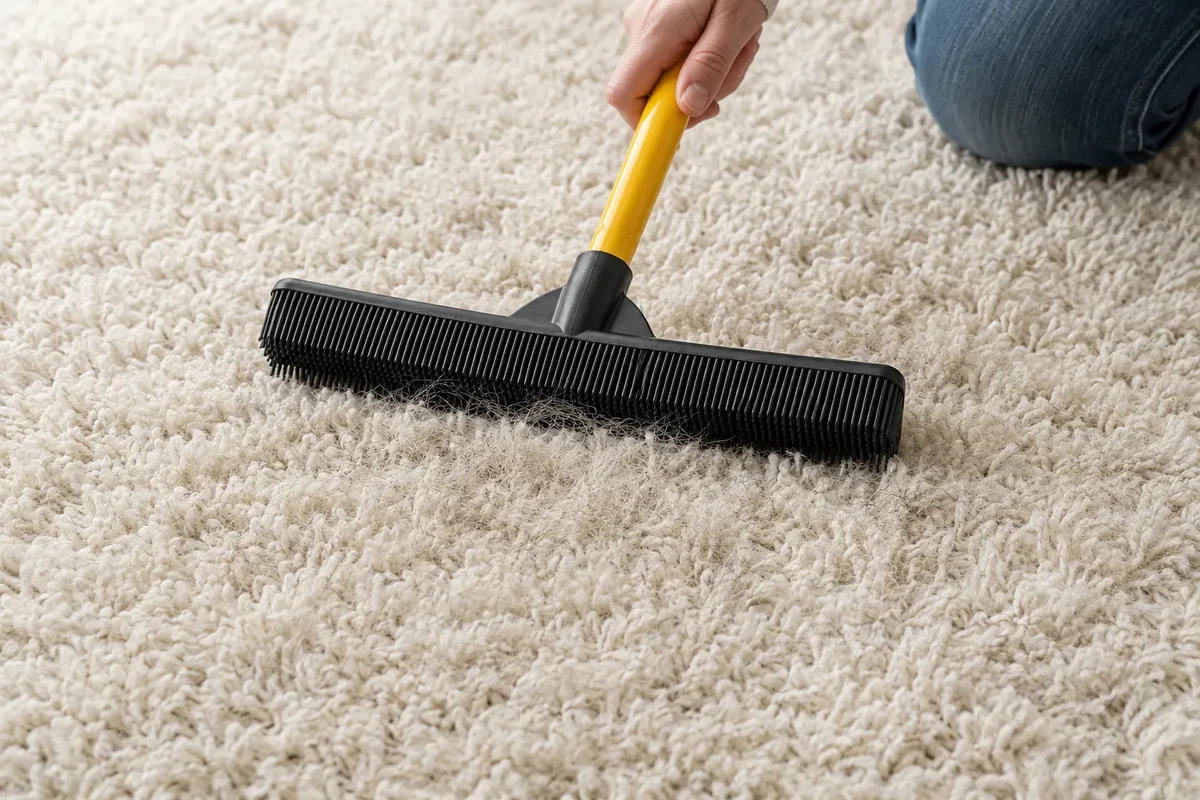
A Rubber Broom Can Help on Some Rugs — but Test It First
Rubber pet-hair tools are useful because they can gather loose fur that ordinary vacuuming leaves behind.
But a shag rug is not the place to assume that every rubber broom belongs everywhere.
Long fibers can catch.
Loops can catch.
Decorative texture can catch.
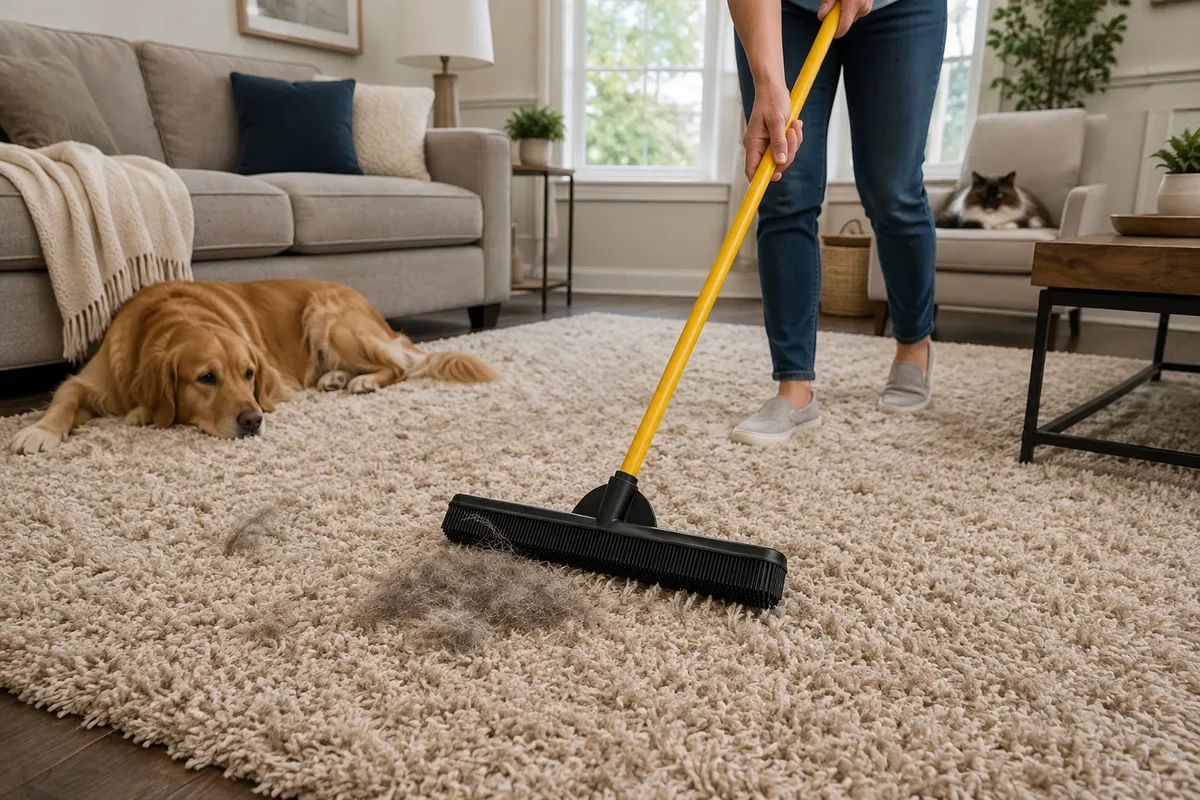
Before using a rubber broom across the entire rug, try a small inconspicuous area.
Use a light pull across the surface.
You want the rubber bristles to gather pet hair.
You do not want them grabbing individual rug fibers and stretching them toward you.
If the tool moves smoothly and brings loose hair together without disturbing the pile, you can continue in small sections.
If it catches the rug itself, stop.
That rug is telling you enough.
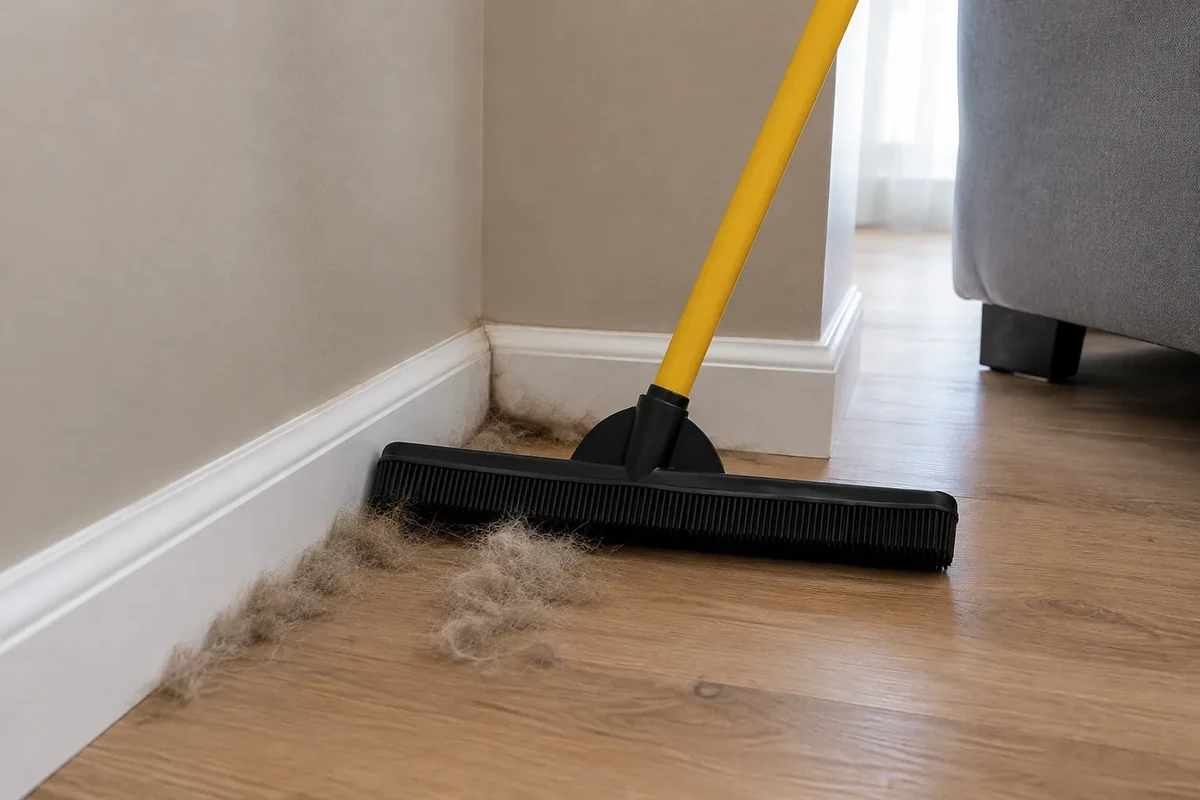
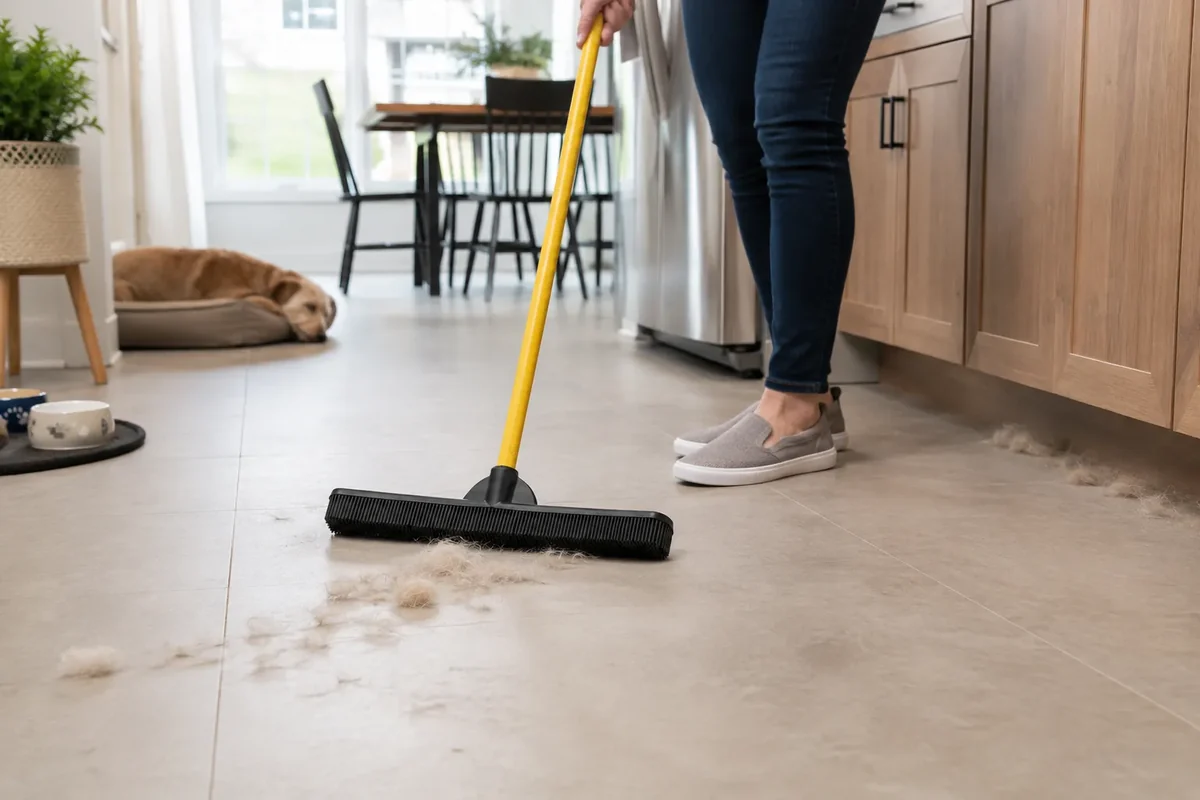
The FURemover Original 58″ Rubber Pet Hair Broom & Squeegee can be useful on compatible rugs and carpets, but high-pile and shag construction varies too much to treat it as a universal solution.
For an ordinary low- or medium-pile rug, our broader How to Remove Pet Hair from Carpet and Rugs guide covers the more general approach.
Short Pulls Are Better Than Wrestling With the Whole Rug
When a compatible rubber tool works well, keep the movement controlled.
Trying to drag the broom from one end of a large shag rug to the other can make it difficult to tell whether you are gathering pet hair or simply pulling through a lot of pile.
Instead, work on one small area.
Bring loose hair toward one spot.
Pick up the resulting fur.
Then move to the next area.
The same principle works with vacuum attachments.
Smaller sections give you a better view of what is actually coming out.
They also make it easier to stop quickly if the rug starts reacting badly.
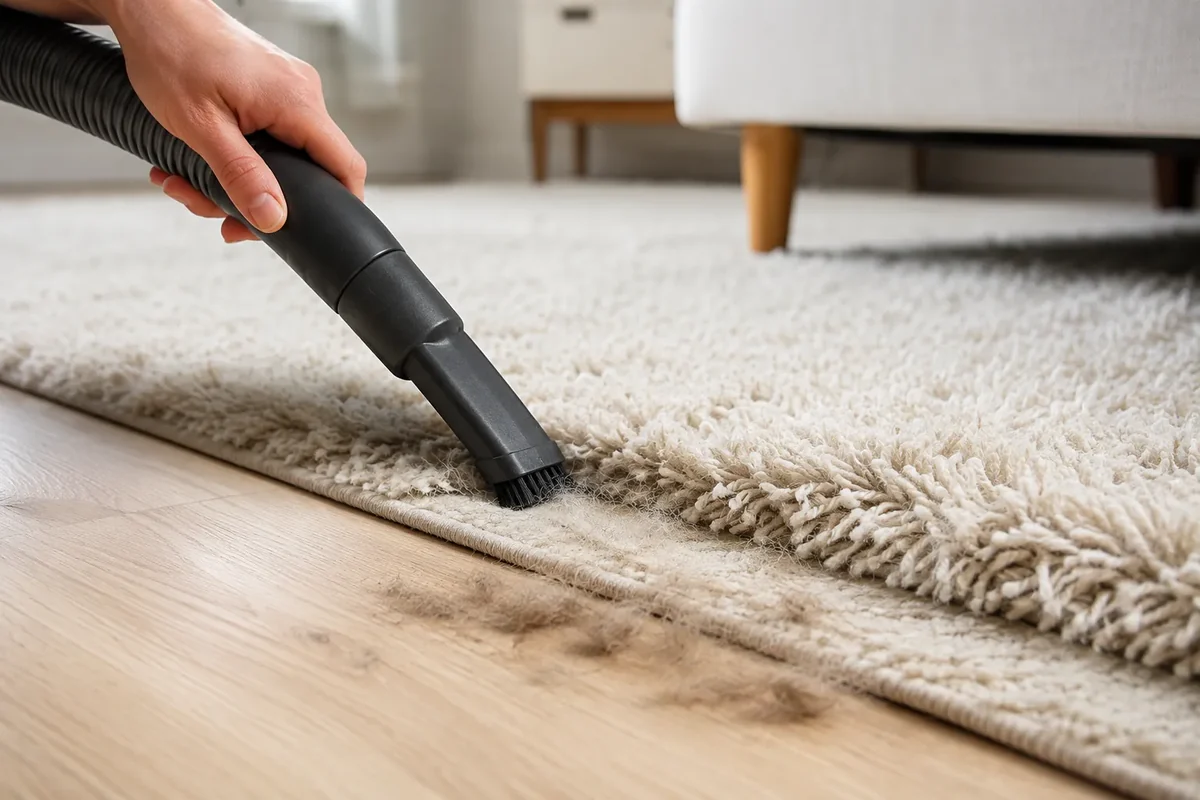
Watch the Edges and Fringe Separately
The center of a rug is not the whole rug.
Edges often collect pet hair, especially where the rug meets hard flooring or sits near a wall.
Fringe is another matter entirely.
Do not run an aggressive rotating brush or rubber tool straight through loose fringe unless the rug's care instructions specifically support that treatment.
Fringe can get tangled around moving vacuum parts or caught in cleaning tools.
Instead, treat the edge as its own small cleaning area.
Use an appropriate attachment or another gentle method that lets you control exactly where the tool goes.
If your rug has elaborate fringe, hand-knotted details, or delicate edge construction, preserving the rug matters more than extracting the last three cat hairs.
Long Pet Hair and Long Rug Fibers Can Look Surprisingly Similar
This is one reason to slow down.
A pale dog hair lying across a dark rug is easy to identify.
A long strand buried in a similar-colored shag pile may not be.
Before pulling at something that appears stuck, make sure it is actually pet hair.
Do not start cutting strands out of the rug.
Do not dig sharp tools into the pile.
And do not assume every resistant fiber is something that needs to be removed.
If the material appears to be part of the rug, leave it alone.
Hair Near the Bottom of the Pile Does Not Always Need a Special Gadget
The temptation with a difficult rug is to keep adding tools.
Vacuum.
Rubber broom.
Glove.
Scraper.
Another brush.
Some homemade trick from a video.
Eventually the cleaning process becomes more complicated than the original problem.
Start with the least disruptive method that works.
If an appropriate vacuum removes most of the fur, that may be enough.
If a tested rubber tool picks up the visible remainder without catching the rug, fine.
You do not need to extract every microscopic strand buried at the base of the pile every time you clean.
A practical pet home is allowed to contain evidence that a pet lives there.
Small Rugs Give You Another Option
If the rug is small enough to move safely, cleaning the floor underneath it can make a noticeable difference.
Loose pet hair often works its way toward the edges and ends up underneath.
Move the rug according to its care requirements and without dragging furniture across it.
Clean the hard floor below.
Then deal with the rug itself.
This is especially useful when you keep finding new fur at the same edge immediately after vacuuming.
Sometimes it is not coming out of the rug.
It was hiding underneath it.
If the exposed floor is wood, see How to Remove Pet Hair from Hardwood Floors. For tile or vinyl, see How to Remove Pet Hair from Tile and Vinyl Floors.
A Rug Pad Can Hide Hair Too
If your rug uses a separate pad, remember that there are now two layers involved.
Hair and dust can reach the perimeter or work underneath when the rug shifts during normal use.
You do not need to dismantle the room every time you see a dog hair.
But during a more complete cleaning, checking beneath a movable rug and pad can explain why the surrounding floor becomes furry again so quickly.
Make sure everything goes back dry and properly positioned.
What About Embedded Hair That Will Not Come Out?
There is a point where continued cleaning stops being useful.
If you have used an appropriate vacuum, carefully tested a suitable manual tool, and the rug still holds some pet hair deep in the pile, harder scrubbing is not automatically the answer.
This is especially true for delicate, handmade, wool, antique, or expensive rugs.
Professional rug cleaning may be a better option when the rug needs more than routine surface maintenance.
The same applies if you are dealing with staining, odor, pet urine, or another problem beyond loose dry hair. Those are different cleaning jobs and may involve the backing, dyes, or other parts of the rug rather than just the visible pile.
Avoid Turning Pet-Hair Removal Into Rug Damage
A few warning signs are worth taking seriously.
Stop if:
- rug fibers are wrapping around a powered brush;
- the vacuum is pulling the rug strongly upward;
- a manual tool repeatedly catches individual fibers or loops;
- the surface starts looking fuzzy after cleaning;
- fringe is being pulled into the tool;
- you cannot tell whether you are removing pet hair or part of the rug.
The correct response is not necessarily to press harder.
It may be to change the vacuum setting, change the attachment, choose a gentler method, or check the rug manufacturer's instructions.
CRI's high-pile guidance exists precisely because pile height can change what kind of vacuum setup is appropriate.
Do Not Treat Every “Carpet Tool” as Safe for Every Rug
This is probably the most important difference between this guide and our general carpet article.
“Works on carpet” is a very broad statement.
A dense low-pile carpet.
A looped rug.
A plush carpet.
A long synthetic shag.
A hand-knotted wool rug.
Those are not interchangeable surfaces.
CRI itself distinguishes among carpet constructions such as cut pile and loop pile, and care guidance from flooring manufacturers can depend on pile and product design.
That is why testing first is useful.
Not because pet hair is particularly mysterious.
Because the rug underneath it may be.
You Can Make the Next Cleaning Easier
High-pile rugs tend to become frustrating when you wait until there is a visible layer of pet hair woven through the entire surface.
Removing loose fur while it is still mostly near the top is easier than waiting for repeated foot traffic to work it farther into the pile.
That does not mean every pet household needs the same vacuuming schedule.
The amount of shedding, rug location, pet size, traffic, and rug construction all change the situation.
Look at the rug.
If fur is beginning to collect, deal with it before the pile becomes a storage system.
In heavy-use pet areas, carpet-care organizations generally recommend more frequent vacuuming than in low-traffic spaces, but the appropriate routine still depends on the actual rug and household.
The Best Method Is the One That Removes Hair Without Fighting the Rug
High-pile and shag rugs are not impossible to keep clean in a pet home.
They just remove some of the shortcuts.
Start by identifying what you are cleaning.
Check the care instructions.
Use a vacuum setup appropriate for the pile.
Work in smaller sections.
Treat edges and fringe carefully.
If you try a rubber pet-hair tool, test it somewhere inconspicuous and stop if it begins catching the rug fibers.
And do not confuse a tool that is difficult to move with a tool that is cleaning especially well.
With long pile, a little restraint is useful.
The point is to remove the dog or cat hair.
The rug should still be there when you finish.
For other surfaces around the home, browse the Pet Hair Cleaning Guides.