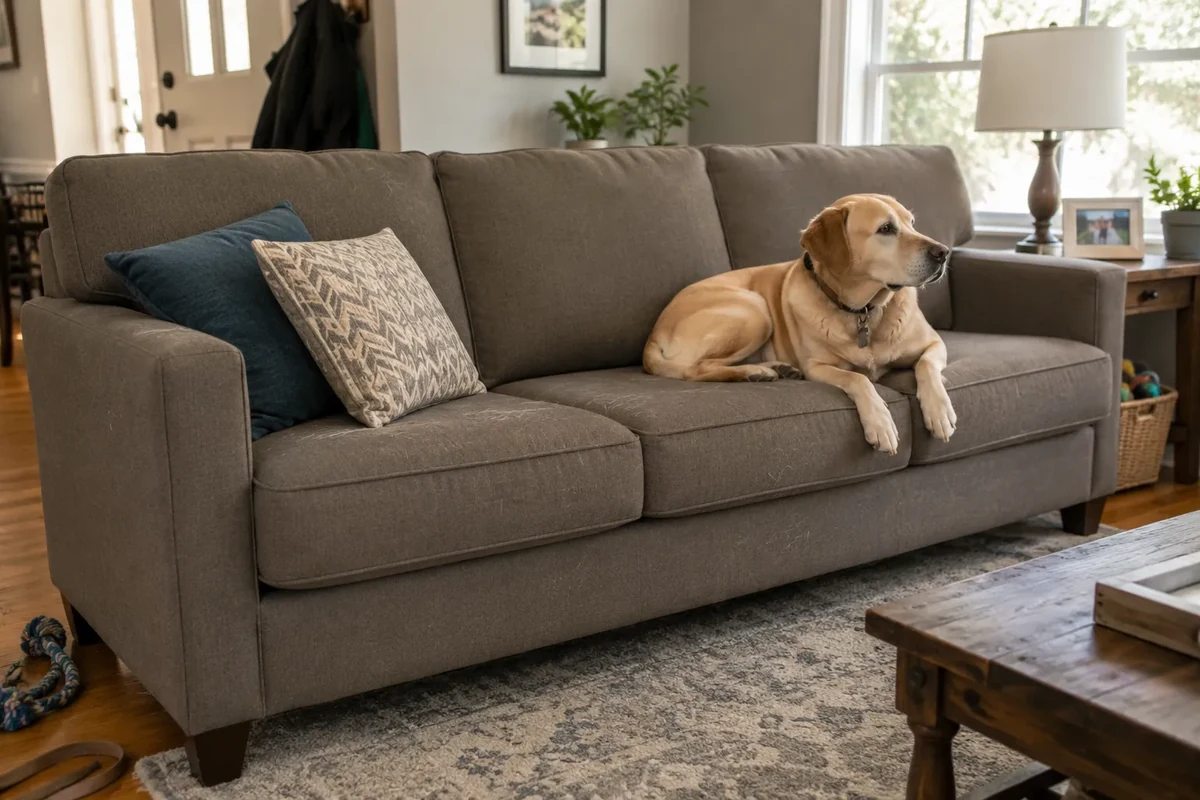
Buying a sofa when you have a dog changes the way you look at fabric.
That beautiful nubby cream upholstery in the showroom? You start wondering what it will look like after a week of muddy paws and loose hair.
The dark navy sectional? Great, unless your dog is light-colored and every hair shows from across the room.
There really isn't a fabric that dog hair refuses to land on. The useful question is whether the surface gives hair somewhere to work itself in — and how annoying it will be to get back out.
In general, tightly constructed upholstery that is durable and easy to clean tends to make life easier in a pet home. That's also how major U.S. furniture retailers commonly identify their pet-friendly fabrics, including Room & Board.
But the name on the fabric card only tells you so much.
Leather Is Easy on Hair, Less Easy on Claws
For loose dog hair, leather has one obvious advantage: there isn't much for the hair to bury itself into.
Hair sits on the surface. You can usually see it, gather it, and move on with your day instead of trying to pull individual strands out of a woven cushion.
That makes leather worth considering if shedding is your main concern.
Claws are the tradeoff.
A dog scrambling onto the couch can leave marks, and some leathers show them much more readily than others. Finish matters, so “leather” by itself is not enough information to make the decision.
If you're shopping in person, ask what type of leather you're actually looking at and how the manufacturer recommends cleaning it. Don't assume the care routine for one leather sofa applies to another.
And if scratches will drive you crazy every time the light hits them, think about that before falling in love with the idea of an easy-to-dehair couch.
Microfiber Is Popular for a Reason
Microfiber isn't glamorous advice, but it can be very practical.
The surface is usually dense, which means loose hair has fewer obvious gaps to settle into than it does with a loose weave. Some microfiber upholstery is specifically sold as pet-friendly because of its durability and cleanability.
It is also available on a lot of furniture in the U.S., from relatively inexpensive sofas to higher-end pieces, so you don't have to redesign the entire living room around it.
Still, look at the actual sample.
Two fabrics can both be called microfiber and feel completely different. One may be smooth and easy to brush clean. Another may have more nap and hang onto visible hair.
This is where touching the fabric is more useful than reading the category name.
Performance Upholstery Is Worth a Look
If the sofa is going into the room where the dog actually spends time, performance upholstery makes sense to consider.
These fabrics are designed with everyday wear and cleaning in mind. Depending on the product, that can include better resistance to stains, abrasion, fading, or odors.
Pet-focused performance fabrics from companies such as Crypton emphasize tight construction and easier hair removal, while Sunbrella also offers upholstery intended for high-use homes where cleanability matters.
That does not make a performance sofa indestructible.
A dog can still shed on it. Claws can still cause wear. A spill can still need cleaning.
The advantage is that you are starting with a fabric intended to deal with more of real life than a delicate decorative textile.
If you're comparing two sofas you like equally, and one has an upholstery option specifically rated for pets or high-use households, I would take a closer look at that one.
Velvet Is a “Check the Specific Fabric” Situation
Velvet gets contradictory advice for a reason.
Some performance velvets are sold as pet-friendly and can work perfectly well in homes with dogs. At the same time, other furniture guidance warns that pet hair can get caught in velvet fibers.
Both things can be true.
“Velvet” describes a broad type of surface, not how every individual upholstery fabric is going to behave in your house.
A short, dense performance velvet may be manageable. A softer fabric with more noticeable pile may show hair every time the dog leaves the couch.
So I wouldn't automatically reject velvet.
I also wouldn't order an entire sectional because someone online said velvet is perfect for dogs.
Get the swatch first.
Loose, Deep Texture Usually Means More Work
This is where shopping by feel can get dangerous.
A chunky weave can look fantastic on a showroom chair. Run your hand over it and it feels expensive and interesting.
Then picture short dog hairs tucked into all those little valleys.
Loose loops and pronounced texture can also give nails more opportunities to catch. That doesn't mean every chenille, bouclé, or textured weave is a bad choice. There are pet-friendly versions of all kinds of upholstery, and construction matters more than the category name alone.
I would just be more suspicious of a fabric where you can clearly see large loops, deep channels, or an open weave.
If your dog sheds heavily, those details may become very familiar after a few months.
Color Won't Stop Hair. It Can Hide Some of It.
Furniture color doesn't make dog hair easier to remove, but it definitely changes how quickly you notice it.
A cream Golden Retriever on a dark charcoal sofa can announce every shedding session.
A black Lab on a very pale couch can do the same thing.
You don't have to match the sofa exactly to the dog. That's probably taking things too far.
But if you're choosing between two similar colors and one is much closer to your dog's coat, the difference in everyday appearance can be surprisingly useful.
Patterns and heathered fabrics can also be more forgiving visually than one perfectly flat solid color.
The hair is still there.
You just don't see every strand from the kitchen.
Take the Fabric Sample Home
This may be the most useful thing you can do before spending serious money on a sofa.
Get swatches.
Many U.S. furniture sellers make upholstery samples available before purchase, and this is exactly the sort of decision where a tiny piece of fabric can tell you more than a long product description.
Take it home and make it slightly less scientific.
Rub a little loose dog hair across it.
Brush the hair away with your hand.
Try your normal pet-hair tool.
Look at the fabric in daylight.
See whether claws could easily catch in the weave.
Then imagine doing that on an eight-foot sectional.
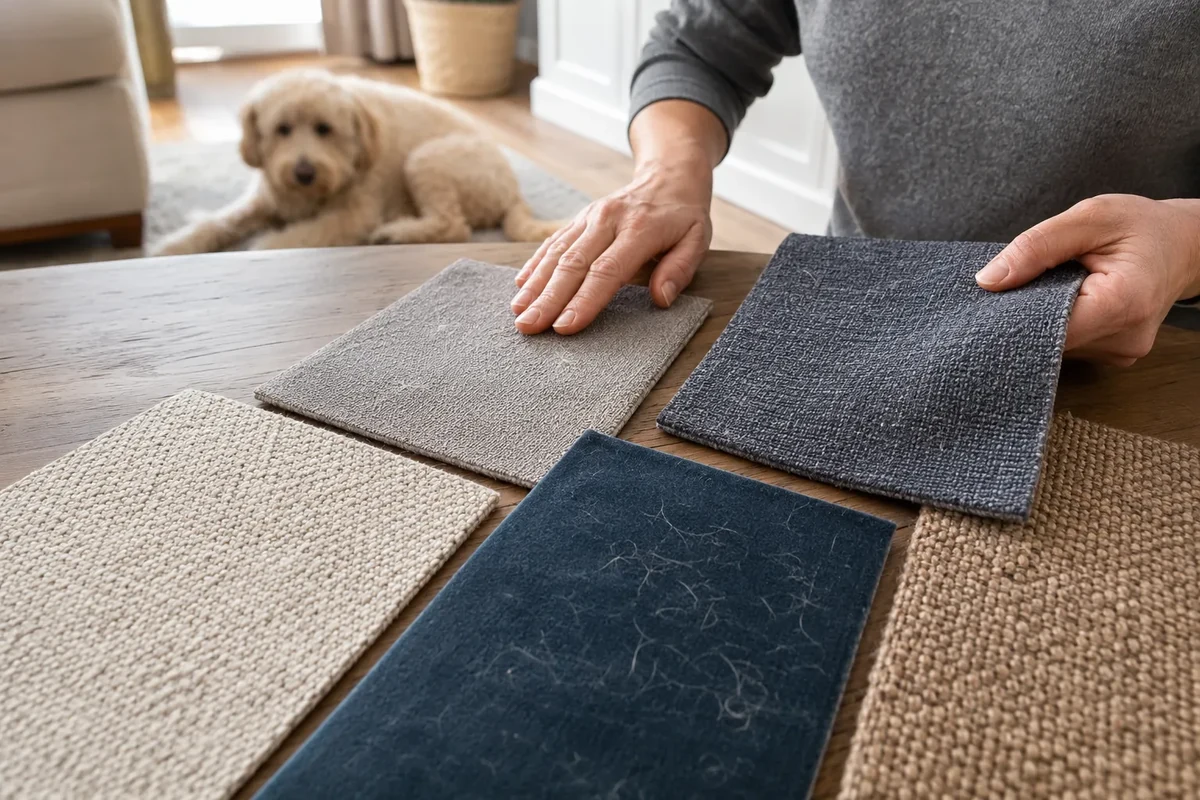
You may find that the fabric marketed most aggressively as “pet friendly” isn't your favorite. You may also discover that the upholstery you nearly rejected is surprisingly easy to clean.
Either result is cheaper to learn from a swatch.
Don't Forget How the Sofa Is Built
Fabric gets most of the attention, but the rest of the sofa matters once a dog starts using it.
Removable cushion covers can be helpful, but only if the manufacturer actually says they can be washed or cleaned the way you plan to clean them.
Very deep seams collect hair.
Loose back cushions create more gaps.
A sofa sitting almost flush with the floor can turn the space underneath into a place where hair disappears until cleaning day.
None of these things should necessarily stop you from buying the furniture you like.
They're just worth noticing before the sofa is already in the living room.
Already Have a Sofa That Loves Dog Hair?
You probably don't need to replace it.
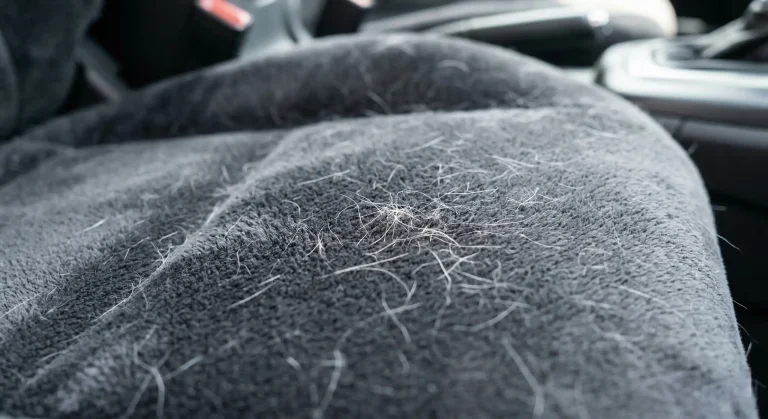
Hair that has worked into upholstery often needs a little friction before the vacuum can pick it up. Rubber tools, upholstery brushes, and similar methods can help gather embedded hair into something easier to remove.
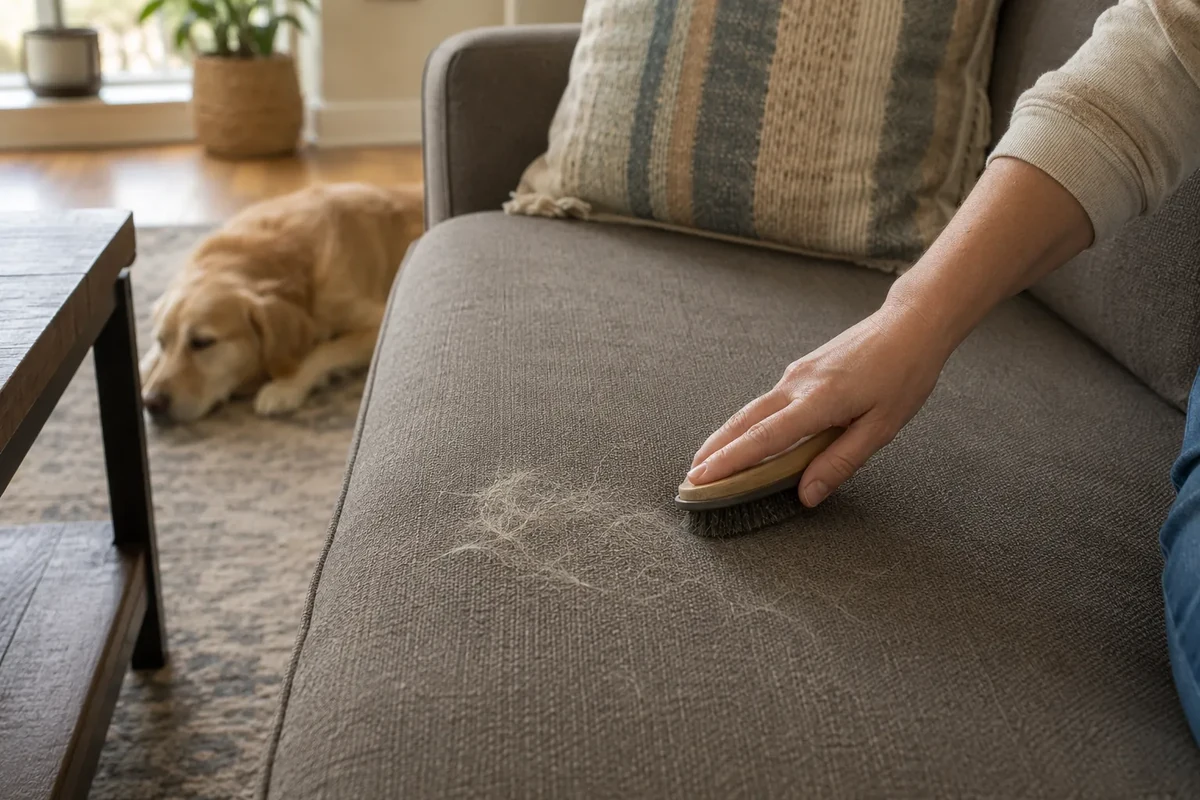
Our guide to removing pet hair from car seats and couches goes through that job in more detail.
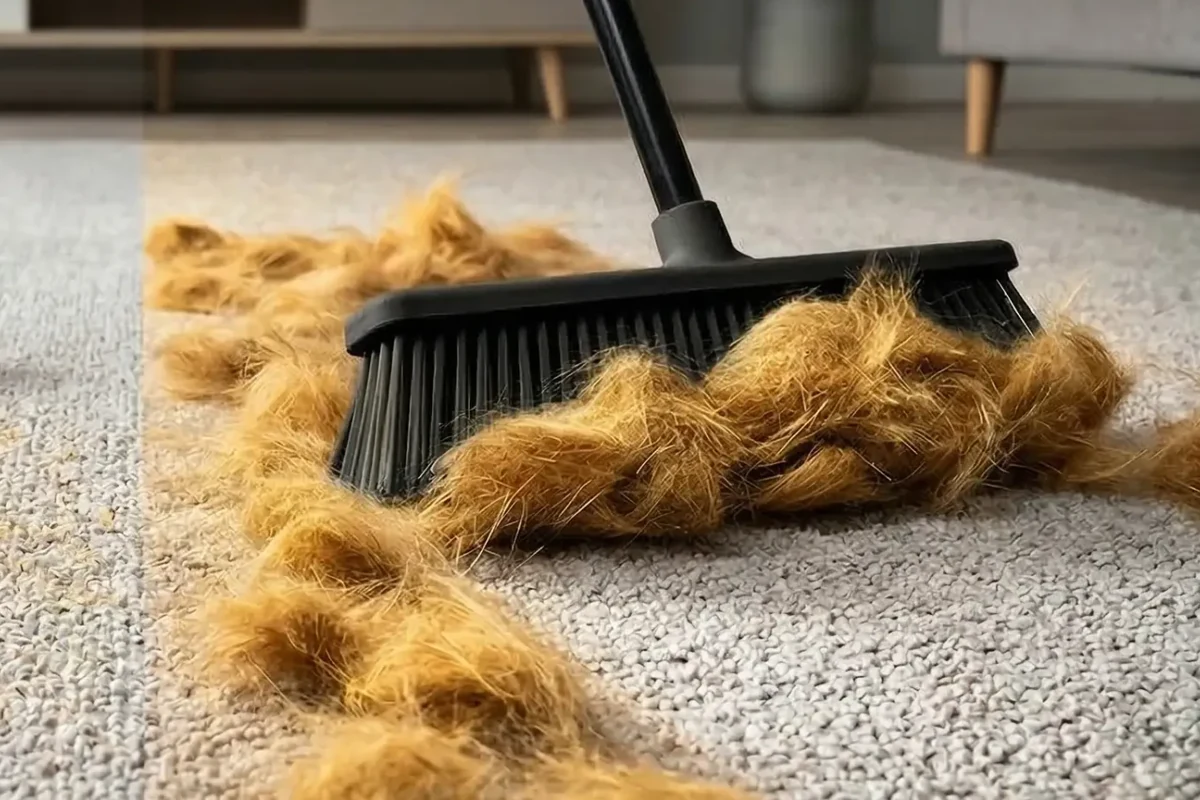
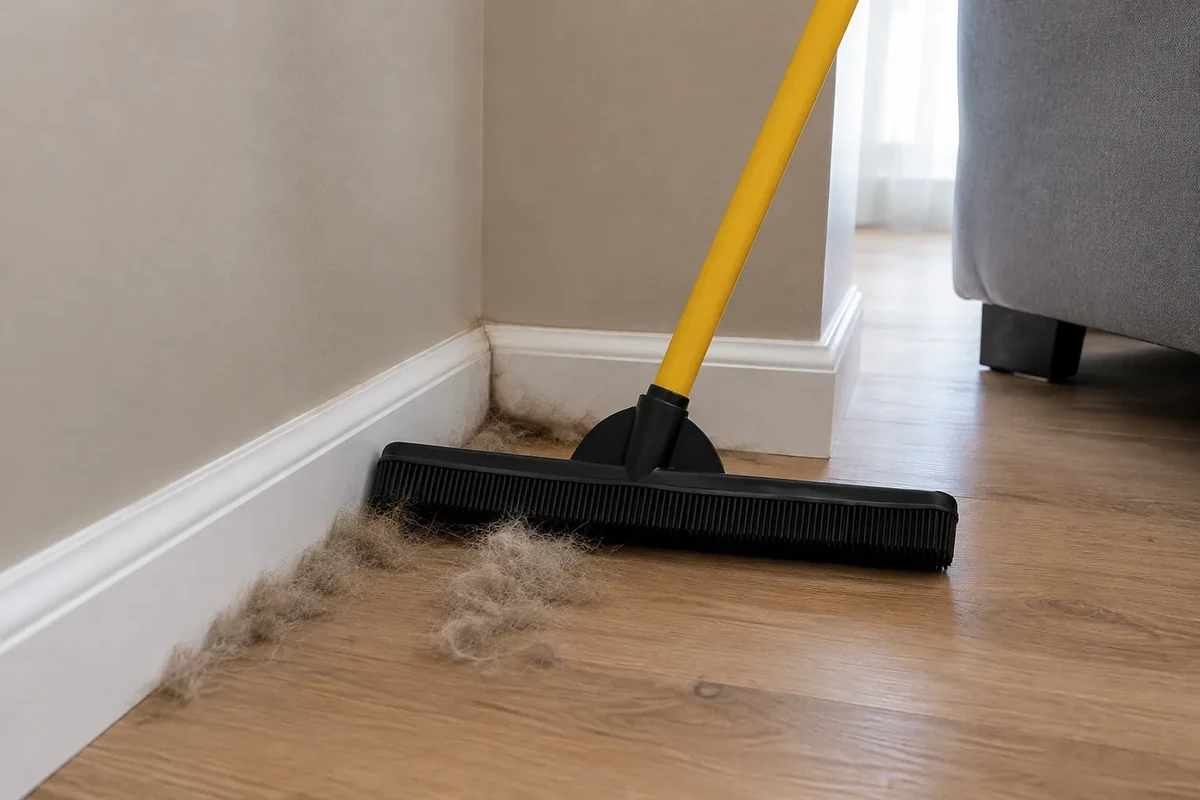
And if the problem isn't limited to the sofa, take a look underneath it too. That strip along the baseboard and the space under furniture are very good at collecting the hair that disappeared from everywhere else. Our guide to baseboards, corners, and under furniture covers those spots.
So What's the Best Sofa Fabric for a Dog?
I wouldn't choose one universal winner.
Leather can be wonderfully easy for loose hair and frustrating if your dog scratches it.
Microfiber can be practical without costing a fortune.
A good performance fabric can make stains and everyday cleanup much less stressful.
Even velvet can work when you choose the right version.
What I would avoid is buying upholstery based on one appealing word.
Not all velvet behaves alike. Not all leather behaves alike. “Performance” isn't a promise that nothing can damage the sofa, and “pet friendly” doesn't mean you'll never need to clean it.
Look at the surface. Check the care instructions. Bring home the swatch.
Then add some dog hair.
That's a much better test than trying to imagine a perfectly clean couch in a furniture showroom.