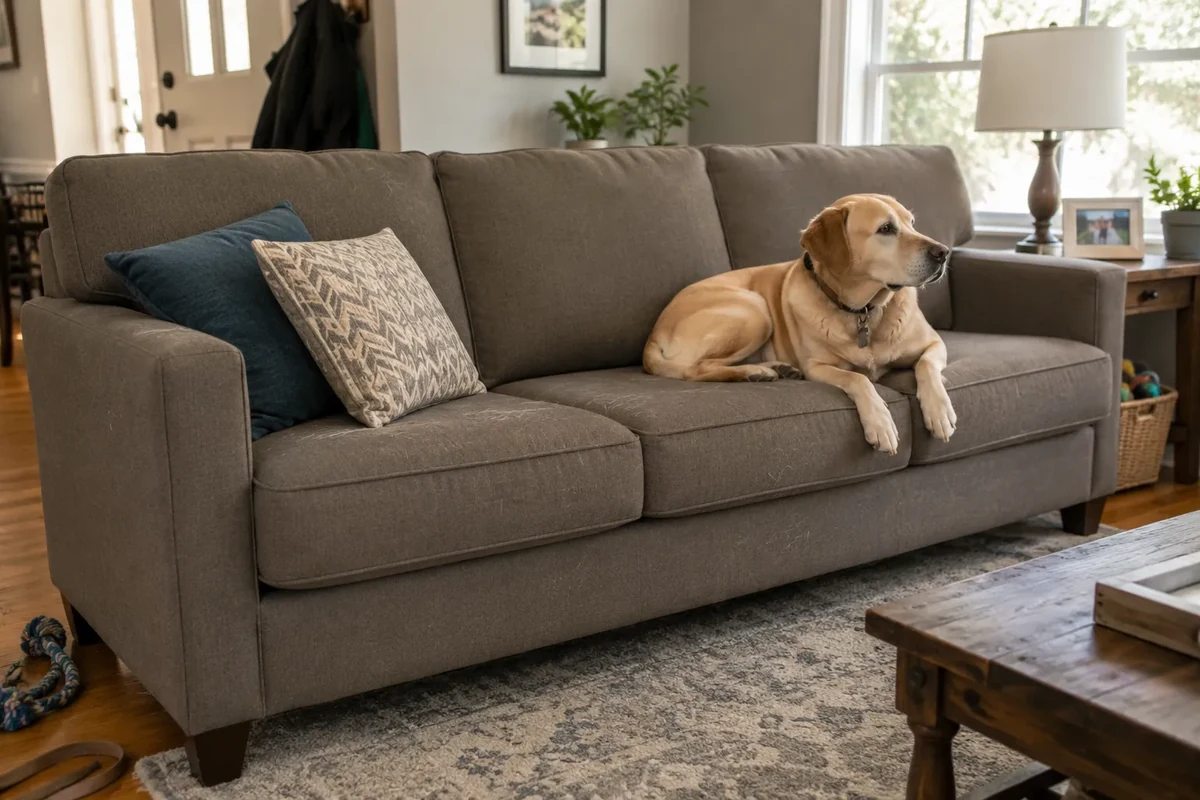
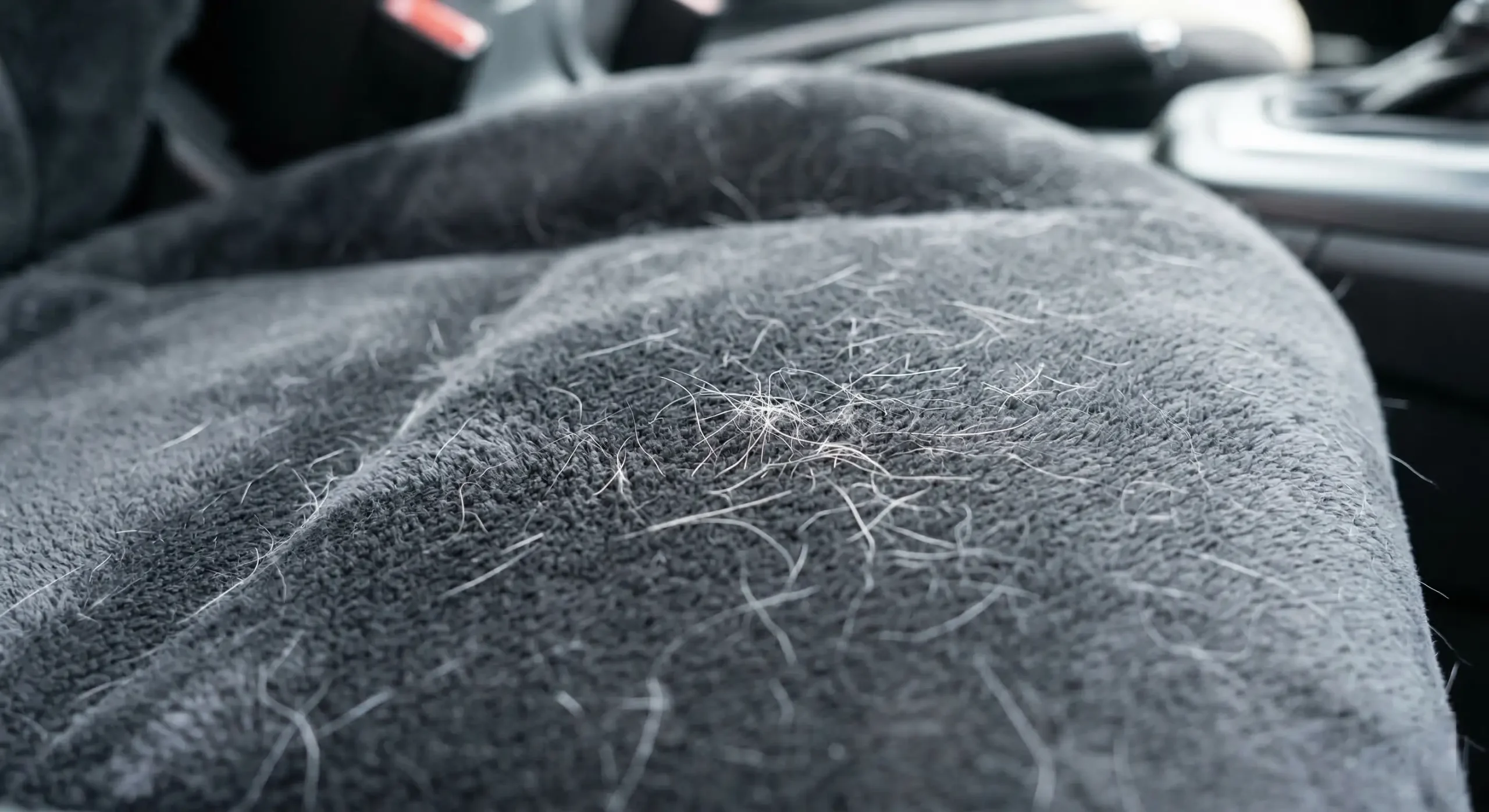
One ride home with a shedding dog can leave the back seat looking as if the dog is still in it. Couches are not much better. Fur settles across the cushions, works its way into the seams, and somehow turns up again a day after you thought you cleaned everything.
The loose hair is usually easy. Vacuum it up and you are halfway there.
It is the hair that has been sat on, rubbed into the fabric, or caught in textured upholstery that makes the job drag on. That is where changing tools helps more than making another ten passes with the same one.
Get the easy stuff out of the way first
Start with the vacuum, but don't expect it to finish the whole job.
On a couch, take off any removable cushions. There is almost always more fur underneath than the top of the couch suggests, especially if a dog or cat has one favorite sleeping spot. Vacuum the cushion faces, the platform below them, and the narrow channel along the arms and back.
A car has different hiding places. Hair collects around seat-belt buckles, stitching, side bolsters, and the crack where the seat bottom meets the seatback. In an SUV or hatchback, the carpeted cargo area can be worse than the seats themselves.
This first pass is mostly housekeeping. Get rid of loose fur, crumbs, grit, and whatever else has accumulated. Once that is gone, the hairs that are actually hanging onto the fabric become much easier to see.
And that is usually the point where the vacuum stops being the most useful tool.
When the seat still looks furry
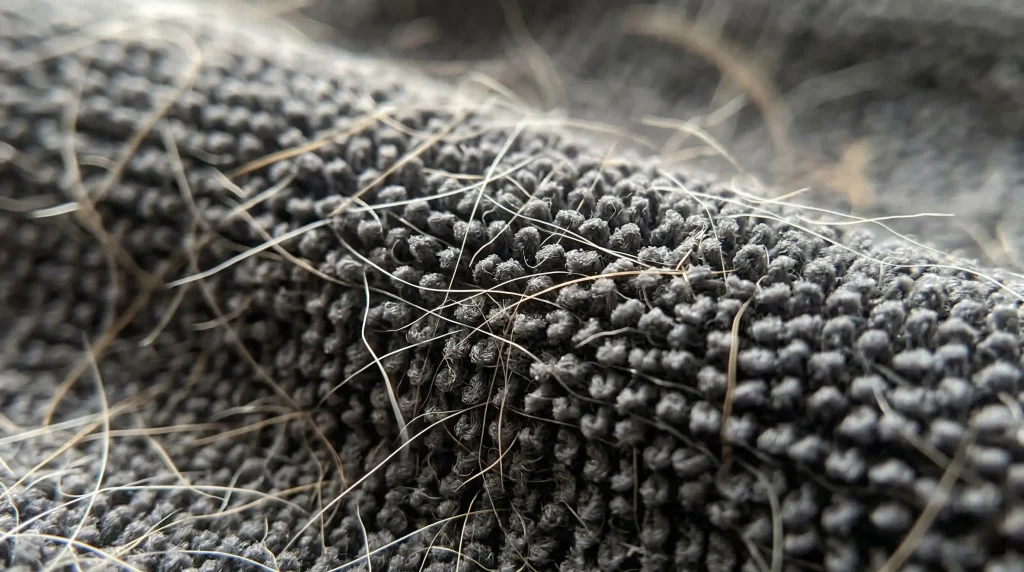
Run your hand across a cloth seat after vacuuming and you may see individual hairs lying flat against the upholstery. Sometimes they barely move under suction.
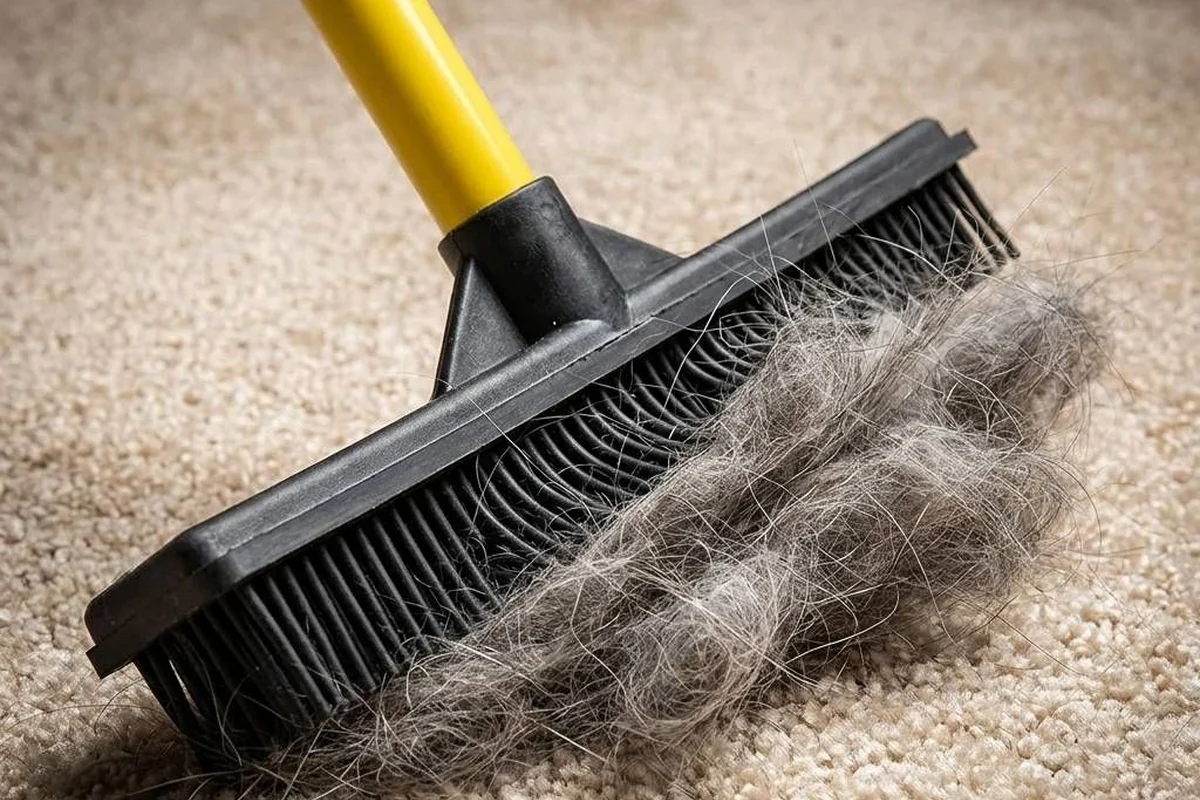
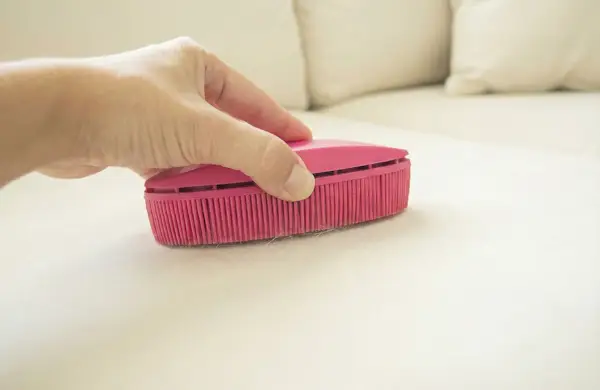
A small rubber brush is useful for that kind of cleanup.
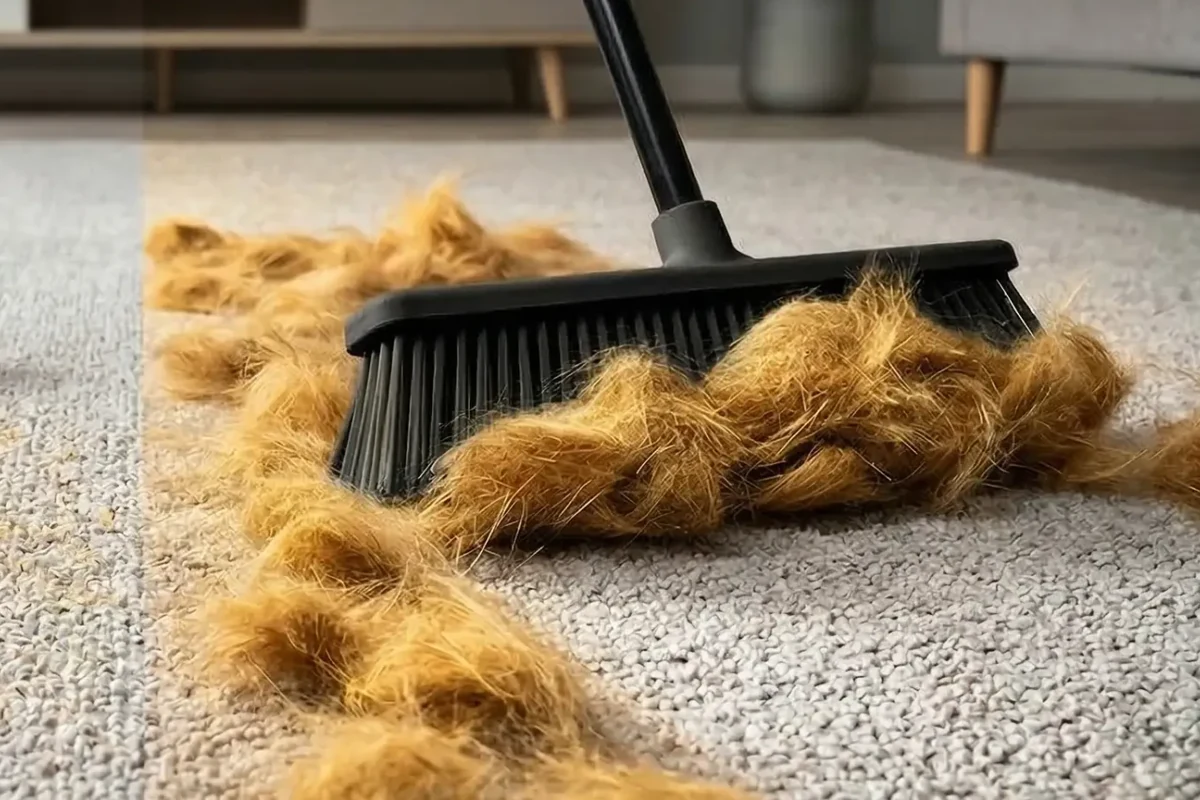
Work a manageable patch rather than trying to sweep the whole couch from one end to the other. A few short passes can start moving scattered hairs toward one another. Once they collect into a little ridge or clump, pick them up and keep going.
There is no need to attack the fabric.
Heavy scrubbing can be harder on upholstery without necessarily removing more hair. If the brush is dragging badly, catching fibers, or making the surface look different, stop and try a less aggressive approach.
The direction matters on some fabrics too. A basic woven car seat is one thing; a couch with a noticeable nap is another. If you are not sure how the upholstery will react, try the tool somewhere hidden first.
A clean rubber household glove can also be surprisingly handy here, particularly around curved seat edges where a brush feels clumsy.
Couches have a way of hiding half the job
Cleaning only the top of a couch cushion is why pet hair seems to come back so fast.
Pull the cushions out and look down.
Fur gets trapped along piping, underneath the front edge, against the back of the frame, and in that narrow canyon between two cushions. A sectional gives it even more places to disappear.
Vacuum those areas first. Then come back to the visible upholstery and deal with whatever hair is still stuck there.
For a lightly furry cushion, a lint roller may be all you need at the end. There is nothing wrong with that. Sticky rollers are convenient for a handful of hairs on a small area.
They become less convenient when you are peeling sheet after sheet to clean an entire three-seat couch.
That is where a reusable brush makes more sense: not because adhesive rollers suddenly “don’t work,” but because the scale of the job has changed.
Car seats are mostly about the edges
The flat center of a rear seat can look clean pretty quickly. The stitched edges usually tell a different story.
Pet hair likes the little recess next to a seat-belt buckle. It gets wedged between the seat and the center console. It sits along the bottom seam where a normal vacuum head cannot make good contact.
Use the crevice attachment for those areas before reaching for anything more aggressive.
If hairs remain along a stitched seam, gently work them toward an open section of fabric where they are easier to collect. A hard scraper or blade might seem faster, but upholstery and stitching are expensive things to damage for the sake of a few stubborn hairs.
Also look at what the seat is actually made from.
Many newer vehicles mix materials: cloth in the center, synthetic trim around the sides, perhaps perforated panels or suede-like inserts elsewhere. A method that behaves well on the fabric panel does not automatically belong on every part of the seat.
Velour and textured upholstery can take a little longer
Some fabrics simply hold hair more stubbornly.
Velour-like upholstery, microfiber couches, and other textured materials give loose strands plenty of places to settle, especially once someone has been sitting on them. On a smooth surface, the same hair might brush away almost immediately.
That does not mean you need a special trick.
It usually means working in smaller areas and paying attention to the fabric instead of the clock.
A few light strokes with a rubber brush may gather what the vacuum left behind. Pick up the collected hair, move over a few inches, and repeat.
If the upholstery begins to fuzz, snag, pill, or show a noticeable change in its finish, that is your signal to stop.
Older furniture and unfamiliar fabrics deserve more caution, not more pressure.
Keep water out of it unless you actually need water
Pet hair is a dry mess. It often makes sense to keep it that way.
It can be tempting to dampen a glove, spray the seat, or reach for upholstery cleaner because the last few hairs refuse to move. But now you are dealing with both pet hair and wet fabric.
If you know the upholstery can be damp-cleaned, fine. If you don't, check its care instructions before adding moisture.
The same goes for homemade cleaning mixtures. Removing fur and removing a stain are two different jobs. There is no reason to turn one into the other.
Where the little pink brush actually fits
The FURemover Rubber Pet Hair & Lint Brush — Pink makes the most sense on the parts of this job where a floor-size tool obviously would not: a couch cushion, one car seat, an armrest, or the fabric patch where the cat sleeps every afternoon.
It is small, reusable, and the rubber bristles can be washed after they have collected enough hair.
The FURemover Duo is another handheld option. Its fine-bristle side is intended for loose fur and lint on clothing, upholstery, and car interiors, while the other side is used for grooming pets.
Neither one needs to replace the vacuum.
For a really furry back seat, the useful combination is often much less dramatic: vacuum what comes up easily, use a handheld tool on what stays behind, and finish the seams before calling it done.
Before you put the cushions back
Take one last look around the area you just cleaned.
On a couch, that means underneath the cushions and on the floor directly below it. In the car, check the mats, the carpet under the seats, and the cargo area if your pet rides back there.
Otherwise, a surprising amount of loose hair is ready to migrate straight back onto the clean fabric.
Then clean the tool itself. Pull the collected fur from the brush, rinse it if the tool is washable, and leave it to dry.
No three-minute promise. Some seats really are quick. A couch that has been claimed by a German Shepherd for six months probably isn't.
The useful part is knowing when to stop vacuuming the same patch and switch to something that gives you a little more grip.
For the rest of the house, the Pet Hair Cleaning Guides cover other common surfaces and cleanup jobs.